ArenaNet took the stage at Summer Game Fest tonight and dropped something nobody in our newsroom expected: Guild Wars 3 is real. Not a tease. Not a logo. A full reveal with an in-engine trailer, a Steam page, a PlayStation Store listing, and a beta window.
We have been playing Guild Wars 2 since the beta weekends in 2012. Some of us still log in on characters we made during those first headstart days, the ones with birthday gifts stretching back more than a decade. In the fourteen years since Guild Wars 2 launched, ArenaNet shipped expansions, living world seasons, and a steady cadence of updates, but never a new game. Tonight, on June 5, 2026, they announced Guild Wars 3, subtitled The Land of Orr.
The game arrives on PC, Steam, and PlayStation 5, marking the first console release in franchise history. ArenaNet plans the first beta for fall of 2027.
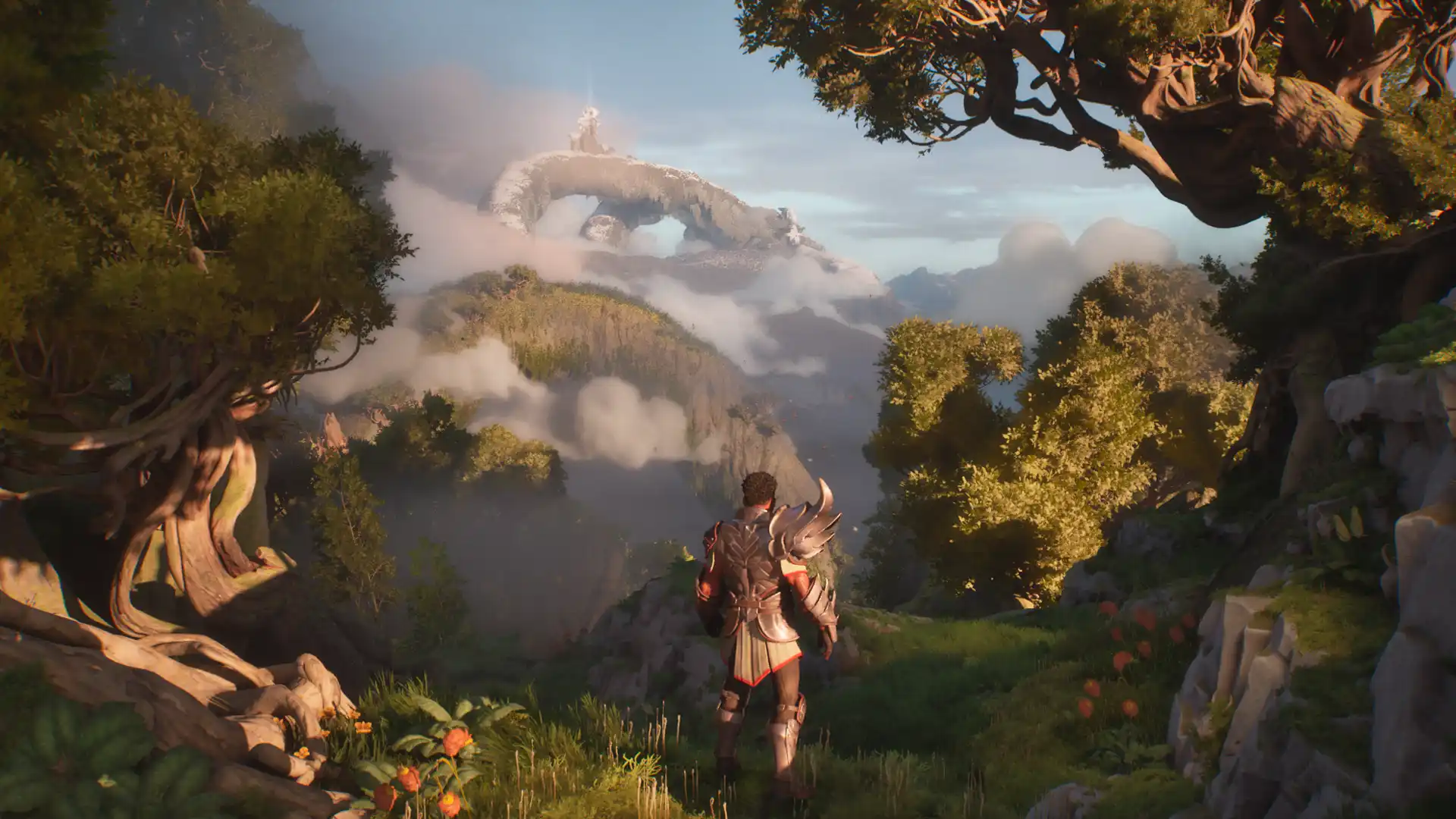
The Trailer: In-Engine and Built Around Movement
The debut trailer is not a pre-rendered cinematic. ArenaNet showed in-engine gameplay footage at the SGF reveal, and you can watch it now through the official Guild Wars 3 press kit. That decision matters. The studio wanted you to see how the game moves before anything else.
And movement is the first thing you notice. A character vaults across a rocky ridge, transitions into a glide, drops into a sprint, and slides into combat without a hard cut. The Seeker, a creature that reads as part fox and part spirit, bounds alongside. Combat sequences show the player carrying momentum from a sprint into a strike, a dodge into a counter, a glide into a dive attack. ArenaNet calls it “a one-of-a-kind movement system that transfers your momentum between modes of travel,” and the trailer makes a convincing case for the claim.
Colin Johanson, Guild Wars 3 Game Director and ArenaNet Studio Head, described the philosophy during the reveal:
“Guild Wars 3 is a new era not just for ArenaNet and Guild Wars, but also for MMORPGs as a whole. Our approach with Guild Wars 3 is to push MMORPGs forward, to create an online game world that feels believable, rewarding, responsive, and innovative while at the same time respecting players’ time.”
That last phrase, “respecting players’ time,” will land with anyone who has ever juggled dailies, raid schedules, and legendary crafting in Guild Wars 2. It suggests a design team that knows exactly who its audience is and what they have been asking for.
Orr, One Thousand Years Before the Fall
Guild Wars 3 takes place in Orr. If you played the original Guild Wars or Guild Wars 2, that name carries history. In the existing timeline, Orr is a sunken kingdom haunted by the undead, dragged from the ocean by the elder dragon Zhaitan. A place of tragedy.
But Guild Wars 3 is set over a thousand years before those events. This Orr is not a ruin. The official description calls it “a vast wilderness frontier imbued with the world’s magic,” a land still alive, still verdant, still brimming with power. The announcement frames Orr as a frontier, not a settled kingdom: “Various guilds are engaged in conflict over how to protect or exploit the bounty beyond civilization’s borders.”
That framing shifts how you picture the world. Civilization exists, but its edges are contested. The wilds are a prize that multiple factions want to control or protect. For longtime players, a prequel this distant sidesteps the narrative weight of two games and twenty years of lore while keeping Tyria intact. New players get a fresh start. Veterans get to see a Tyria they have only read about in background text.
The official announcement page on guildwars3.com promises more details soon on “the timeline and setting of Guild Wars 3, Orr, the Six Gods, and the capital city of Arah.” The studio is not shying away from the deep mythology that has always set the Guild Wars universe apart.
The Vael Spirits and the Seeker
The defining supernatural element of Guild Wars 3 is the Vael spirits. These are “nature entities with strong connections to the land” that “embody the vitality of this lush, verdant landscape.” They are not gods and they are not elder dragons. They are local, tied to specific ecosystems, and they vary “in size and influence within the ecosystems around them.”
Concept art from the press kit depicts a massive natural arch framing a windmill and farmland, with two Vaelwardens approaching on foot. The scale places the supernatural alongside the mundane without letting either dominate, a balance Guild Wars 2 handled well in zones like the Echovald Wilds.
The most notable Vael spirit is the Seeker, and every player gets one. It serves as both a “connection to the spirits of Orr” and a mount. This is not the stable of interchangeable creatures Guild Wars 2 introduced with Path of Fire. The Seeker appears to be a persistent companion tied to your character’s relationship with the spirit world, something between an animal companion and a familiar.
ArenaNet has not detailed how Seeker customization will work, but the studio’s track record with mount skins in Guild Wars 2 suggests they know how much players care about making their ride look like their own.
You Are a Vaelwarden
Players take on the role of a Vaelwarden, “a member of a guild of adventurers committed to preserving and protecting both the spirits of the wild and the land of Orr itself.” The name is a signal: you are a warden of the Vael, a guardian of the spirits. The announcement adds that Vaelwardens protect “the people who live beyond the walls of the towns and cities of Orr,” which draws a line between civilization and the frontier and places you firmly on the frontier side.
Johanson described the game as a place to “build community and enjoy new stories in our universe,” and the Vaelwarden concept threads community directly into the premise. You belong to a guild from the start, an organization with a shared purpose, playing alongside other Vaelwarden players who carry the same charge.
The faction tension comes built into the setting. Various guilds disagree about what to do with Orr’s bounty. Where your guild falls on that spectrum, and how that choice shapes your experience in the shared world, is one of the open questions the announcement leaves unanswered. The language suggests branching choices more persistent than the personal story paths Guild Wars 2 offered at launch.
Combat Built for Controller and Keyboard
Guild Wars 3 marks the franchise’s console debut, and ArenaNet designed its combat with controller and keyboard in mind from the start. The reveal materials emphasize “the joy of movement and momentum.”
The combat description from the official site is worth quoting in full: “Master a combat system where depth is achieved through strategic skill use, positioning, and movement, where action RPG combat meets Guild Wars build-making, creating a unique combat experience.” Players “seamlessly transition between various movement modes,” and those transitions feed directly into combat effectiveness. You can “harness your speed and turn it into bigger damage and impact when fighting your foes.”
This is not a tab-target system with a controller overlay bolted on. The language points toward an action RPG where velocity and spatial awareness are part of your damage rotation. If you played Guild Wars 2’s action camera mode, you have a rough idea of the direction, but the dedicated controller design and momentum systems suggest something more integrated.
The emphasis on positioning as a rewarded skill hints at enemy design that cares about where you stand. Boss encounters that punish poor positioning are a hallmark of Guild Wars 2’s best fights. ArenaNet appears to be baking that philosophy into the core movement system rather than treating it as encounter-specific design. The official page lists “glide, ride, leap, and wall-run” as traversal modes, with wall-running opening up vertical movement in ways the raptor and springer never quite managed.
Buildcraft and Character Customization
The Guild Wars franchise built its reputation on skill-building. The original game let you pick a primary profession, a secondary profession, and hundreds of skills to combine into a bar of eight. Guild Wars 2 replaced that with weapon-swap profession mechanics and trait lines that invited deep theorycrafting. ArenaNet says Guild Wars 3 will continue that tradition.
The announcement promises “deep character customization and skill-building gameplay the Guild Wars franchise is known for.” Players will “grow their relationships with the spirits of the wild, the inhabitants of Orr, and other Vaelwarden players.” That structure suggests three parallel progression tracks: spirit bonds, NPC relationships, and player-to-player connections, each feeding into different aspects of your build.
What the skill system looks like remains a mystery. Will we see a return to the larger skill pools of the original Guild Wars? A refinement of the weapon-based system from Guild Wars 2? Something built from scratch around the Seeker and spirit bonds? The studio is not saying yet, but the explicit mention of buildcraft as a core pillar tells you they know what their most dedicated players spend their time on.
PC, Steam, and PlayStation 5
For the first time in franchise history, a Guild Wars game launches on a home console. Guild Wars 3 arrives on PC, Steam, and PlayStation 5. No Xbox announcement accompanied the reveal, and ArenaNet has not commented on whether other platforms are planned.
You can wishlist the game right now on Steam and the PlayStation Store. ArenaNet plans the first beta test for fall of 2027. Signups are open on the official Guild Wars 3 website, though the servers buckled under launch-night traffic. If you tried to register during the SGF broadcast and got an error, you were far from alone. The site has since stabilized.
ArenaNet has not announced a release date. The studio promises more information “through the rest of this year and into next year,” pointing to a cadenced reveal schedule rather than a single blowout.
Fourteen Years, One New Game
Here is where we at Exitializ get to say something personal, because we have been playing Guild Wars 2 since those first beta weekends in 2012. Some of us ran the Ascalonian Catacombs before anyone knew the stack spots. Some of us still have our original characters sitting on character select screens, with birthday gifts stretching back fourteen years. We were there when Heart of Thorns launched and gliding rewired how everyone thought about map design. We were there when Path of Fire gave us mounts that moved like characters instead of speed boosts.
When a studio you have spent this much time with announces its first new game in nearly two decades, the reaction is excitement and anxiety mixed together. Excitement because ArenaNet has earned the benefit of the doubt: Guild Wars 2’s combat remains the best-feeling hybrid system in the genre, its mount design redefined open-world traversal, and its shared open-world content made the kill-stealing model look archaic. Anxiety because the MMORPG graveyard is full of sequels that chased trends instead of trusting what made the original work.
But the June 5 reveal gives us reasons to be hopeful. The prequel setting frees the studio from the accumulated narrative weight of two games while keeping Tyria intact. The movement-first combat philosophy builds on what Guild Wars 2 already does better than anyone else. The Seeker as a persistent spiritual companion suggests ArenaNet wants to deepen the relationship systems that gave Guild Wars 2’s mount quests their surprising emotional weight.
Guild Wars 3 is an “action-adventure MMORPG” and “a modern evolution of the genre,” per the official site. ArenaNet spent fourteen years earning the right to make those claims. We will be watching, and we will be in that beta the moment the servers open in fall 2027.
You can wishlist Guild Wars 3 on Steam and the PlayStation Store. Sign up for the beta at guildwars3.com.